Halloween Haunted House Embroidery: A Designer's Review
When a client asked me to create a series of custom embroidered tote bags for a boutique's Halloween pop-up shop, I knew the design selection was critical. The theme needed to be instantly recognizable, festive but not overly cute, and have enough detail to feel premium on a handmade product. That's when I came across the Halloween Haunted House Vector Clipart. From a designer's perspective, this isn't just a graphic; it's a potential embroidery project with a very specific personality.
First Impressions: Spooky Charm Without the Gore
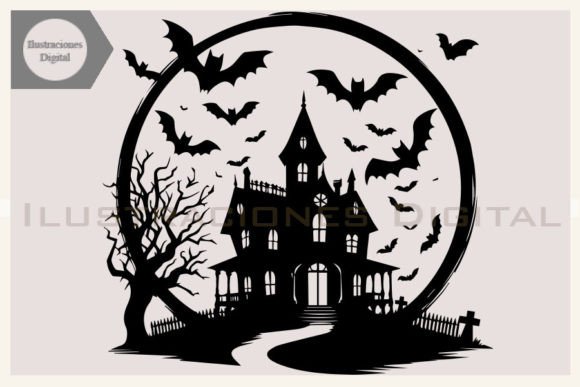
The silhouette of this haunted house immediately sets a mood. It’s the classic, towering Victorian-with-cupola style, leaning slightly, with a few bats in the sky. The details—like the crooked windows and the subtle hints of boarded-up sections—aren’t overly intricate. This is a huge advantage for embroidery. It creates spooky charm without relying on gory details that might not appeal to all customers, especially for items like baby blankets or family kitchen towels. The layout is balanced and self-contained, meaning it won’t feel awkward or stretched when scaled up for a sweatshirt back or down for a cap’s front panel.
Where This Design Naturally Belongs
In my studio, I picture this design translating beautifully onto a few key products. A medium-sized rendition on a heavyweight cotton tote bag would look fantastic, with the fill stitches giving it a substantial, textural feel. On a black or heather grey sweatshirt, using a mix of satin stitch for the house and running stitch for the finer bat outlines, it would become a standout holiday apparel item. I also see it working wonderfully as a standalone embroidered patch, appliquéd onto an apron or a pillow cover for seasonal home decor. For small business owners, this graphic has that “giftable” quality—it’s clearly Halloween but artful enough that it feels like a proper handmade product, not just a novelty.
The Practicalities of Stitching This Spooky Scene
Moving from the visual to the practical, the vector nature of the file is its greatest strength for embroidery designers. Being scalable without quality loss means I can confidently adjust it for different hoop sizes and project types. However, the real-life embroidery performance depends on how we handle its elements.
For projects like custom apparel on t-shirts or thinner fabrics, I'd advise paying close attention to stitch density, especially in the larger fill areas of the house body. A very dense fill on stretchy fabric can lead to puckering. Testing on scrap fabric first is essential. On darker fabric backgrounds, the thread color choice becomes paramount—you’ll want good contrast so the bats and finer window details don’t get lost. On curved surfaces like caps, the taller, slender shape of the house means you need to consider the orientation; it might be best slightly scaled down to fit the curved area without distortion.
Where a Careful Approach is Needed
There are a few scenarios where I'd proceed with extra caution. If you're thinking of a very small hoop size, perhaps for a baby bib or the corner of a tea towel, some of the smaller details (like the bat wings or window lines) might become too fine and blur into a single stitch line. On textured fabrics like certain blankets or sweaters, the clarity of the silhouette could soften. And for products destined for frequent washing, like adult aprons or kids' sweatshirts, ensuring the stabilizer is correct and that the design isn't so dense it becomes stiff is a key step for longevity. These aren’t drawbacks of the design itself, but simply the realistic considerations any professional would apply.
Turning a Graphic into a Valued Product
How does using this Halloween Haunted House Vector Clipart affect the final product's appeal and value? From a commercial embroidery perspective, it adds recognizable, thematic value quickly. For Etsy sellers or craft fair vendors, having a well-executed, clean version of this on a product immediately communicates a holiday offering. The design’s clarity leads to stitching clarity, which in turn builds customer trust—they see a neat, intentional embroidered item. For brand consistency, if your small shop specializes in holiday goods, this design fits a cohesive Halloween collection alongside pumpkins and ghosts.
Its giftability is high. As a personalized gift—for instance, embroidered on a pillow cover with someone’s name underneath—it becomes a unique seasonal keepsake. The professionalism comes from our execution, but the design provides a strong, adaptable foundation.
Essential Designer Notes Before You Hoop
Before committing this to a client project or your own shop merchandise, here is my standard practical checklist. First, always test the embroidery file on your scrap fabric, mirroring the final project's fabric type and color. Check thread color contrast against both light and dark backgrounds; a simple black-and-white mockup can help visualize this. Review the stitch density in your software after scaling to your intended hoop size. Inspect the small details to ensure they'll be clear at your chosen size.
Use the proper stabilizer for your fabric. And crucially, confirm the licensing terms for this digital embroidery file before selling finished items or commercial embroidery projects. The product listing mentions it contains vector files, but as a designer for hire and a small business owner myself, I always verify the specific commercial use rights directly.
This Halloween Haunted House Vector Clipart, from the Crafts and Graphics category, is more than a digital asset. It’s a versatile starting point for creating embroidered products that carry a mood, a theme, and a handmade quality. With a thoughtful approach to scaling, fabric choice, and thread application, it can become the centerpiece of a successful Halloween project, whether for a personalized gift, a boutique product, or your own craft business’s holiday lineup.